
Gdańsk Travel Guide: Notes from the Old Town, from a Tri-City Resident

Gdańsk, the Polish city known as the "Pearl of the Baltic," still moves me every time I visit, even though I live nearby. Its red-brick streets have a certain warmth to them, and as a port city that once thrived as a leading member of the Hanseatic League, they're also full of energy.

What kind of city is Gdańsk?
Gdańsk is the largest city in the Tricity area (Gdańsk, Sopot, Gdynia) and one of Poland's leading tourist destinations, sitting on the Baltic coast in the Pomerania region of northern Poland. As I mentioned in my Gdynia article, it has far more crowds and tourists than Gdynia — but for good reason.

A Hanseatic trading city

Gdańsk's prosperity dates back to the Middle Ages. After joining the Hanseatic League in the 14th century, it became a key hub of Baltic trade and amassed enormous wealth. The city is especially famous for the amber trade, and is still known today as the "Amber Capital." The grand merchant houses lining the Old Town are a direct physical legacy of that era of prosperity.
A city once wiped off the map

Walking through Gdańsk's Old Town, you might notice a strange feeling that every building is "new, yet old." There's a reason for that. Around 90% of Gdańsk's Old Town was destroyed in fierce fighting near the end of World War II. Afterward, Poland chose to faithfully rebuild the city brick by brick, using old paintings and photographs as reference. In other words, the beautiful streets you see today were brought back from ruins through sheer force of will. Knowing this background completely changes the experience of walking through the Old Town.
The birthplace of the Solidarity movement

Gdańsk also played a major role in modern history. In 1980, a strike at the Gdańsk Shipyard gave rise to the "Solidarity" (Solidarność) trade union movement, which eventually helped lead to the revolutions of Eastern Europe and the end of the Cold War. You can learn about this history in detail at the museum built on the former shipyard site — I've written a separate, in-depth article about visiting it if you're interested.
The Gdańsk Old Town area (Główne Miasto / Stare Miasto)
This area is the heart of a visit to Gdańsk. Half a day to a full day is enough to cover the main sights.
Gdańsk Główny (Gdańsk Central Station)

This station building, with its red brick and towering clock tower, serves as the gateway for visitors — and it's every bit the grand Hanseatic-style architecture you'd expect. Did you know there's actually another "version" of this station far away, in Japan? There's a building in Imari City, Saga Prefecture, modeled directly on this station. How was it recreated during the Cold War, when photographs and sketches of the original were forbidden? I've written up that story separately, so do take a look if you're curious.
It's a large station, home to long-distance "Intercity" (national rail) trains as well as local trains, and the central bus station sits just behind the train station. It's easy to get a little lost, so when in doubt, just follow the colored lines on the floor. Another nice touch since the renovation: free-to-use restrooms inside the station.

Ulica Długa (Long Street) and Długi Targ (Long Market)

This is the main street of the Old Town, running in a straight line from the "Golden Gate" (Złota Brama) to the "Green Gate" (Zielona Brama). Both sides are lined with the ornate townhouses that Hanseatic merchants once built to outdo one another. Just comparing the facade decorations one by one as you walk is enjoyment enough. In warmer months, you'll often spot street painters and performers along the way.

Of course, both sides of the street are also packed with restaurants and cafés, and in the warmer season the balcony seating fills up with people enjoying a meal or a drink.

Neptune's Fountain (Fontanna Neptuna)


Standing at the center of Długi Targ, this fountain is Gdańsk's iconic symbol and a classic meeting spot. Built in the 17th century, it's fittingly themed around Neptune, the god of the sea, given the city's maritime history. During the Christmas season, a large Christmas tree goes up here too, adding to the festive atmosphere.

St. Mary's Church (Bazylika Mariacka)

Said to be one of the largest brick churches in the world, this massive building is just as impressive inside. It's the most prominent church in the Old Town, so it's easy to find. One thing you absolutely shouldn't miss once inside: the astronomical clock in the far left corner. Remarkably, this wooden astronomical clock dates back to the 15th century — it's hard to believe it was built over 500 years ago. You'll find yourself standing there wondering just how they managed to make it. The design is striking, too, and well worth a close look. And of course, entry is free.


The Crane (Żuraw) and the promenade along the Motława River

This medieval crane, once actually used along the Motława River, is known as one of the largest wooden port cranes in Europe and is another of Gdańsk's landmarks. The riverside promenade (Długie Pobrzeże) is perfect for a stroll or for photos, and I'd also recommend viewing the city skyline from the opposite bank. In summer, cruise boats run across the river too.


By the way, if you're a fan of the game The Witcher, here's a must-see spot for you: the scenery around the Żuraw is said to closely resemble Novigrad, the medieval city in the game, which is said to have been designed based on Gdańsk. Once you compare the two, you'll have no doubts.


A spot for a panoramic view of Gdańsk: Góra Gradowa

Since it sits on the opposite side of the Old Town and other main sights, this panoramic viewpoint tends to get overlooked — it's called Góra Gradowa ("Gradowa Hill"; Góra means "mountain/hill"). From this small hill just behind Central Station, you can take in the whole city of Gdańsk. The hill has a long history of its own: an early settlement was established here in the 10th century, it was fortified between the 17th and 19th centuries, and today it houses a history and science museum. It's just a 10-minute walk from the station, so my personal recommendation is to climb up here after you've explored the city, so you can look out and think, "oh, that's where that building was!" — a nice way to recap your walk.


Where to buy souvenirs
Sklep Pańska

If you're not sure what to buy as a souvenir, this gift shop is a safe bet — you're bound to find something. Beyond the usual magnets, keychains, and postcards, Sklep Pańska carries a wide range of goods, from cute socks and mugs to eco bags and T-shirts. What makes it stand out is that alongside typical "gift shop" items, it also stocks cute, stylish goods from local makers.


Skład Rzeczy Ładnych

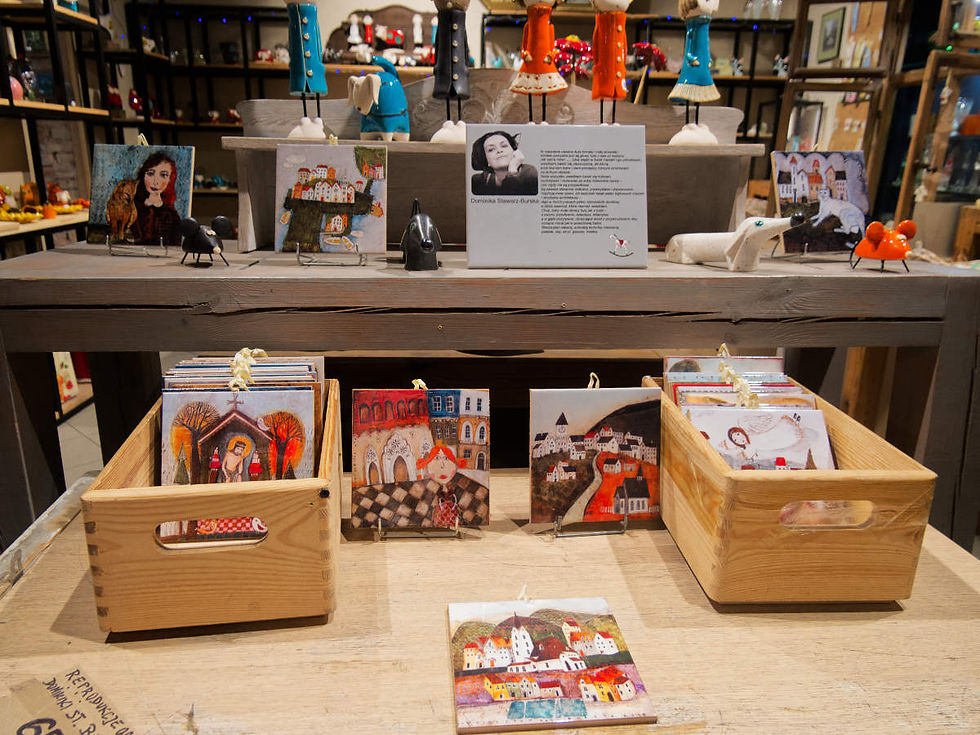
This shop is a great pick if you want something handmade — ornaments, plates, earrings, and more, all made by local Gdańsk artists. I doubt I'm the only one who, having come all the way to Gdańsk, wants to bring home something made by a maker from the area. You're sure to find some little ornament or object here that makes you want to decorate your room with it.
Michel (amber shop)

Amber shops are everywhere in Gdańsk, since amber is practically synonymous with the city. Among them, one I'd especially recommend is "Michel," an amber jewelry shop run by an elderly couple, a family business passed down through generations. Necklaces and earrings line the shelves inside. The shop has apparently been featured in magazines around the world — even Japanese magazine clippings were on display inside. If you want to try on a few pieces, the couple will happily help you out.
Beyond shops, you'll also find amber jewelry displayed in showcases set up along the streets of Gdańsk, so it's worth browsing around and picking out a design you like. Colors and designs vary enormously, so it's worth taking your time.
Recommended cafés
Leń

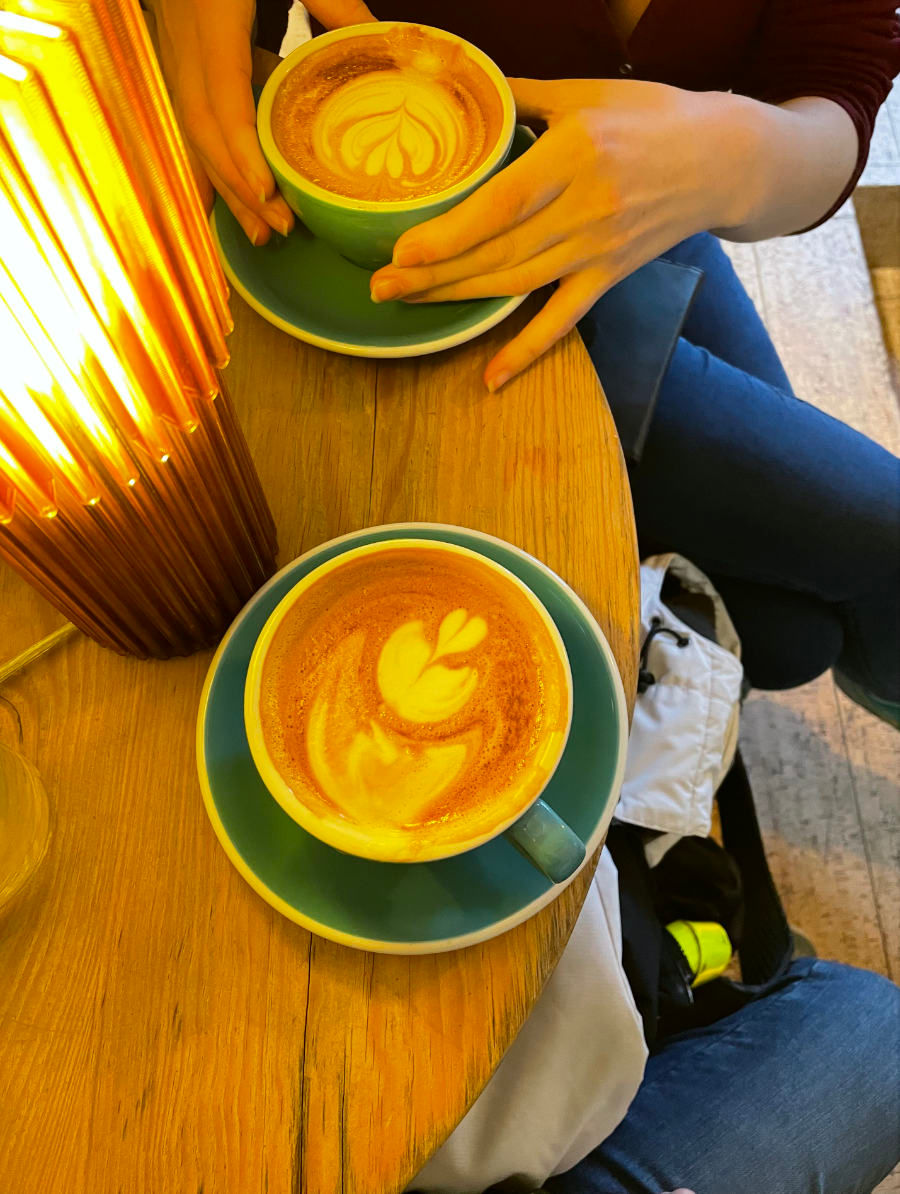
"Leń" means "lazybones" in Polish — and true to its name, this café has a relaxed atmosphere that feels almost out of place amid Gdańsk's crowds of tourists. It's a cozy little café, and especially in winter, the warm-toned interior feels wonderfully comfortable. The coffee is excellent too, and the pastries are delicious — well worth pairing with your coffee.

100cznia (a culture spot on the former shipyard site)

Born in 2017 on the site of the former Gdańsk Shipyard, this is a unique culture hub made up of colorful shipping containers — a kind of "city within a city," complete with street food, bars, a concert stage, gift shops, and even a skate park. It's popular with local young people, but there's also a playground for kids, making it a fun spot for families too. The outdoor area operates seasonally from May to September, while only the indoor area stays open in winter. There's a lot to say about this place, so I plan to give it its own dedicated article soon.
Westerplatte

This peninsula, located at the entrance to Gdańsk's harbor, is where fighting broke out on September 1, 1939 — the event that effectively marked the start of World War II. The story of the Polish garrison's resistance against the German attack is still told in Poland today. A massive monument and the remains of wartime gun batteries still stand here today, and many visitors make the short trip out from the Old Town to see it. Given how much history is packed into this site, I'd like to cover it in its own dedicated article as well.
Getting around Gdańsk

Most of the spots covered in this article are within easy walking distance of each other. Westerplatte is the one exception, being farther out — I'd recommend either the bus or the "MEVO" bike-share service to get there. Within the Tri-City area (Gdańsk, Sopot, and Gdynia), the bike paths are well maintained and the terrain is mostly flat, so getting around by e-bike while taking in the scenery is a great option. I've written a detailed guide to using MEVO in a separate blog post.
For getting around by bus, tram, or local train, the app "Jakdojade" is extremely handy — I'd recommend reading up on that as well.


Comments